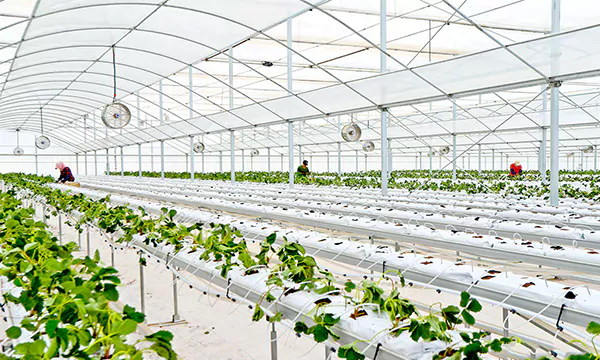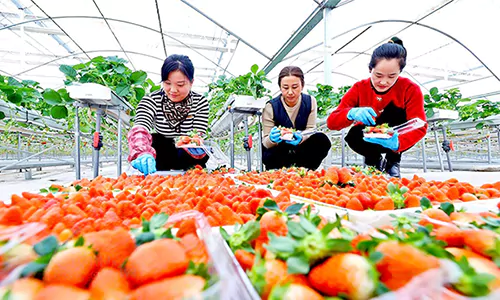

Tropical coastal zones, especially regions under tropical monsoon climate, face frequent typhoons and heavy rain in summer and autumn, alongside intense sunlight and high temperatures.
All these create tough growing conditions for vegetable farming in the tropics.
Open-field cultivation is heavily limited by rain erosion, making leafy vegetable production difficult.
Summer and autumn therefore become the off-season for leafy greens in these coastal tropical areas.
Greenhouses offer reliable rain protection to shield crops from downpours, yet they bring new challenges: typhoon resistance and excessive internal heat.
For this reason, greenhouse frames built in tropical coastal locations must withstand typhoon damage. Their layout should also support natural ventilation to prevent overheating inside. Supplementary cooling systems such as shade netting and mechanical ventilation can be added where needed.
Our team has spent years addressing these real-world challenges. By reviewing common failures and pain points of greenhouses deployed along tropical coastlines, we have developed a range of site-adaptable greenhouse structures.
These designs have been manufactured for many years and proven in field projects. They fit tropical coastal environments and cater to different crop requirements and site conditions.
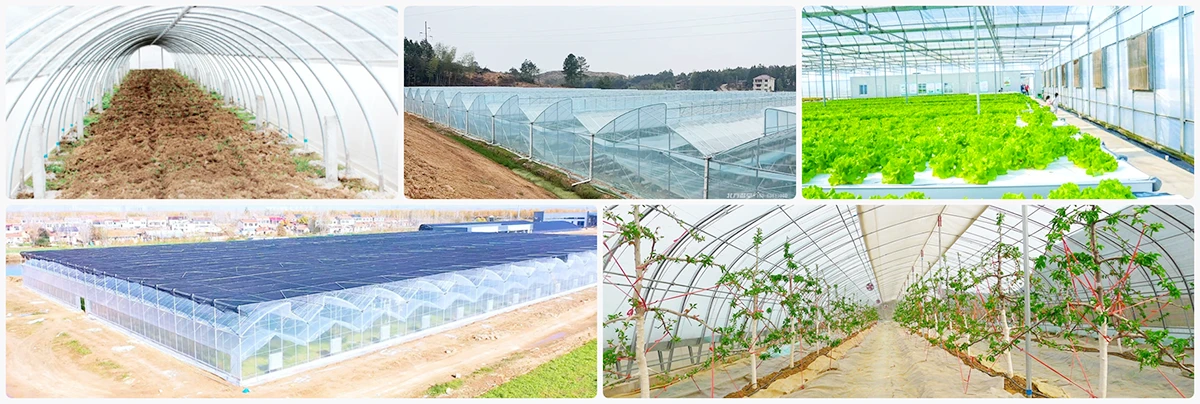
Greenhouse for typhoon-prone tropical coastal areas
This article introduces six greenhouse models grouped into two main shapes:
single-arch and multi-span sawtooth types.
Typhoon resistance is the core design requirement for every model shown here. Each design balances ventilation, shading and rain protection to solve the primary bottlenecks for tropical vegetable greenhouses. They are cost-effective, simple to operate and low-maintenance, well suited for large-scale vegetable production.
Field trials confirm all six models meet design targets with stable performance and strong practical promotion value. We continue refining and upgrading these designs based on ongoing site feedback.
I. Single-arch Greenhouses
For single-arch tunnels, smaller spans generally pair with lower heights; wider spans require taller frames.
Small-span single arches feature lower profiles, and extra internal posts can be fitted. This boosts wind resistance, cuts construction cost and improves airflow.
We cover four common configurations:
small-span tunnel arch, post-supported wide-span arch, medium-span semicircular arch, and foot-reinforced wide-span arch. Each serves different operational needs at different price points.
“Wide”, “medium” and “small” span descriptions here are relative.
1. Small-Span Tunnel Arch Greenhouse
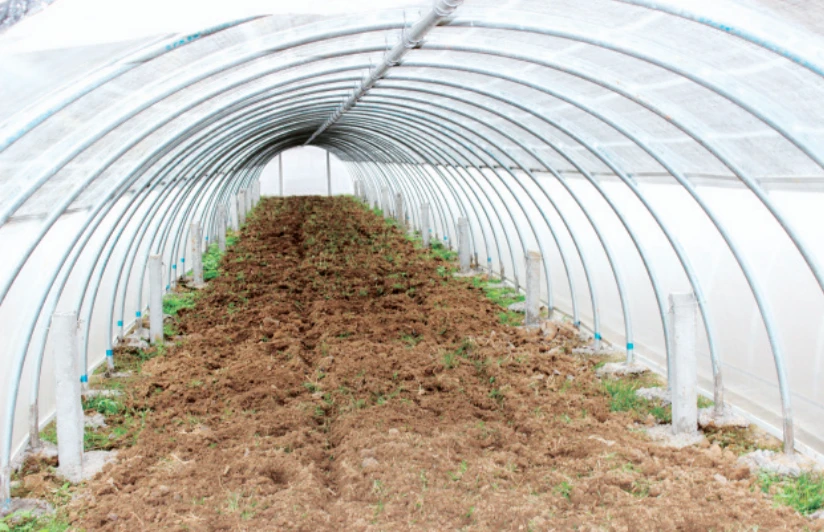
Small-span tunnel hoop greenhouse with wind-resistant concrete column footings
Specifications & Construction
• Arch peak height: 1.7 m, span: 3.3 m, arch spacing: 0.8 m. Recommended length: 30–40 m
• Frame: hot-dip galvanized steel pipe
• Two concrete end posts fitted at each gable end. Concrete ground stakes installed every 4 m along both sides of the base to anchor the frame against typhoon uplift and side load
• Longitudinal bracing runs along the arch curve on both end sides
• Insect net fitted below the shoulder line to form side ventilation openings; plastic film covers the upper arch, overlaid with 50% shade net secured by tension wires
Advantages
1. Compact span saves land and simplifies later maintenance
2. Additional concrete anchors counteract the light weight of steel frames, greatly improving stability and resistance to tipping and uplift during typhoons
3. Combined cross ventilation from side openings and top shading keeps temperatures low around the crop canopy
4. Top film blocks heavy rain, while the shoulder insect net absorbs rain impact, reducing washout on young vegetable seedlings
Limitations
Height is kept low to hit wind-load targets and control costs.
It allows worker access but leaves little room for farm machinery. Best suited for smallholder family plots.
2. Post-Supported Wide-Span Arch Greenhouse
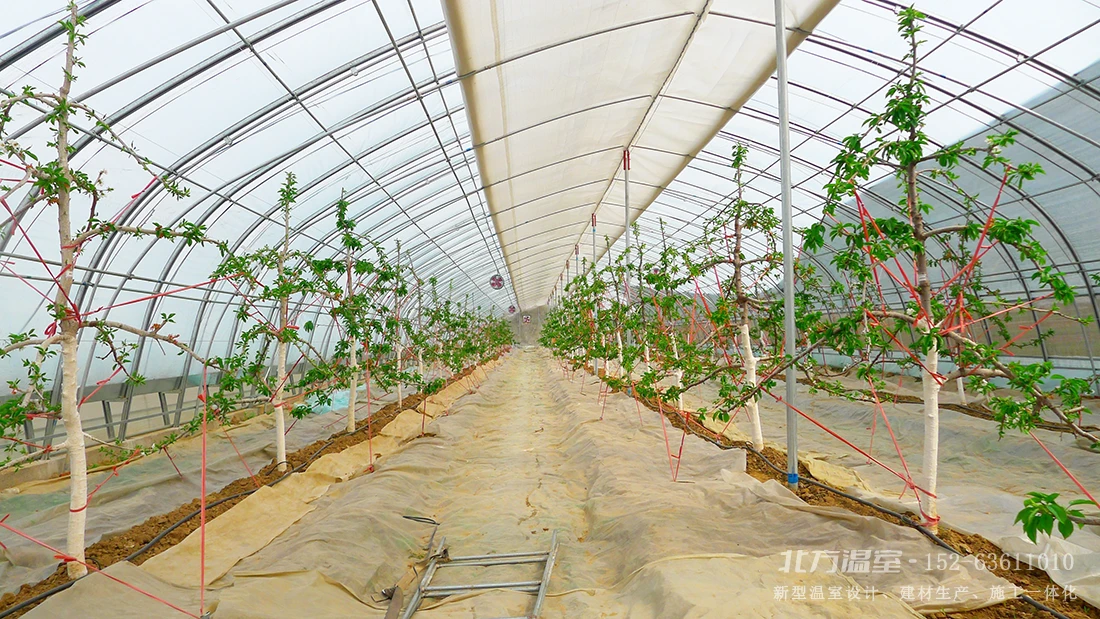
Large-span arch greenhouse with supporting columns
Specifications & Construction
• Two concrete posts at each gable end. Concrete support posts fitted at both sides and the centre line every 4.2 m along the length for typhoon stability
• Longitudinal bracing along the arch curve on both end sides
• Insect net below the shoulder for ventilation; plastic film on upper arch with 50% shade net outside, fixed with tension wires
Features
This design shares a similar layout with the small tunnel arch, but with a wider span and taller profile. Larger internal space makes crop management easier.
3. Medium-Span Semicircular Arch Greenhouse
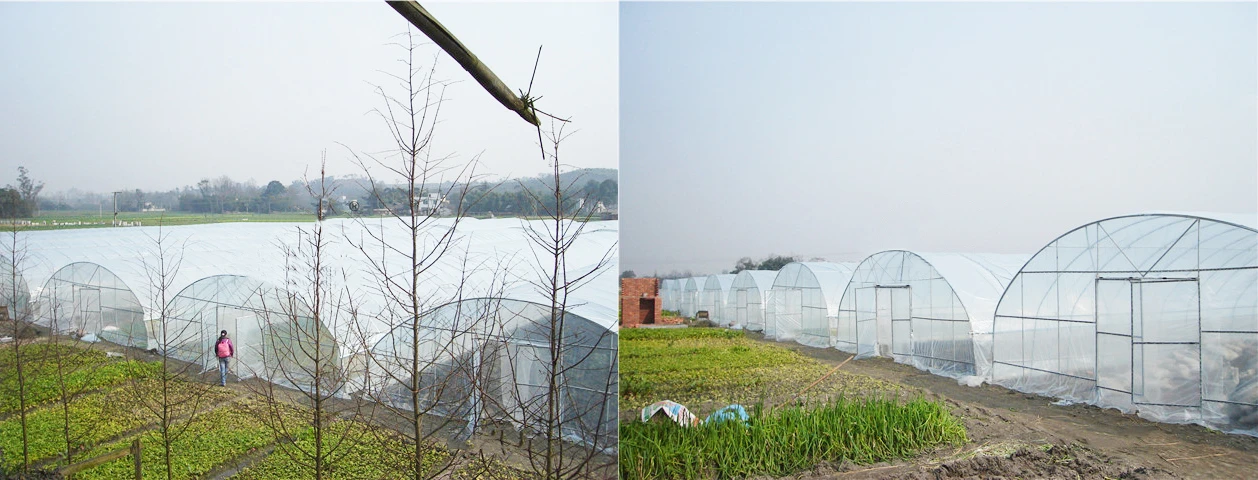
Medium-span semicircular arch greenhouse
Specifications & Construction
• Peak height: 2.5 m, span: 5.0 m, arch spacing: 0.7 m, semicircular arch profile
• Main frame: hot-dip galvanized steel pipe; two hot-dip galvanized steel posts at each gable end
• Longitudinal bracing along the arch curve on both end sides
• Insect net below shoulder for ventilation openings; plastic film above shoulder, overlaid with 50% shade net and tension wires
Features
1. Continuous grade beam foundation around the perimeter delivers excellent stability and uplift resistance
2. Only the bottom 150 mm of the beam is cast concrete; the upper 350 mm is backfilled with native soil. It preserves topsoil and barely disrupts cultivation
3. Perimeter natural ventilation plus overhead shading effectively reduces internal temperature
4. Top film provides full rain cover, enabling year-round cropping
5. Spacious interior works well with small horticultural equipment
4. Foot-Reinforced Wide-Span Arch Greenhouse
Specifications & Construction
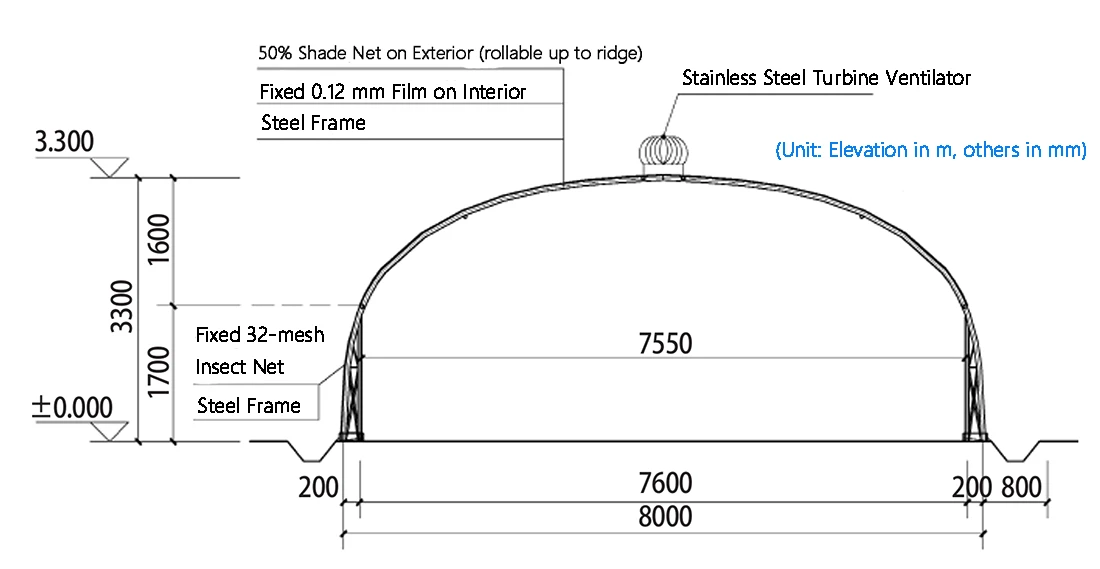
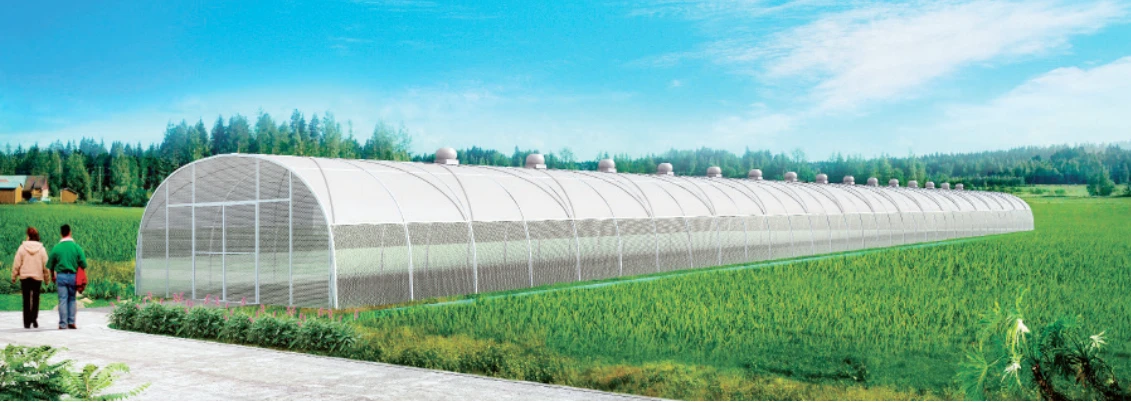
• Peak height: 3.3 m, span: 8.0 m, arch spacing: 2.0 m; hot-dip galvanized steel pipe frame
• Specialised design: single tube arch top with no cross members. Truss reinforcement at arch feet to maintain typhoon resistance across the wide span
• Insect net ventilation windows around the perimeter; film covering the roof. Stainless steel non-powered roof vents create cross airflow to fix poor hot-air exhaust common in wide greenhouses
• Roll-up external shade mounted on the arch roof, easy to retake down in cooler months
Features
1. Ridge vents drive strong cross airflow and efficiently expel trapped hot air
2. Roof film and shade net protect crops from heavy rain and intense sun for stable production
3. Frame layout optimised to balance working space and typhoon load requirements
4. 3.3 m ridge height and clean uncluttered roof structure deliver far more internal room than the other three single-arch types, fully compatible with farm machinery
This model is ideal for cooperatives and commercial farms running large-scale vegetable planting. It offers competitive pricing for its wind rating and usable space.
II. Multi-Span Sawtooth Greenhouses
1. Large Sawtooth Multi-Span Greenhouse
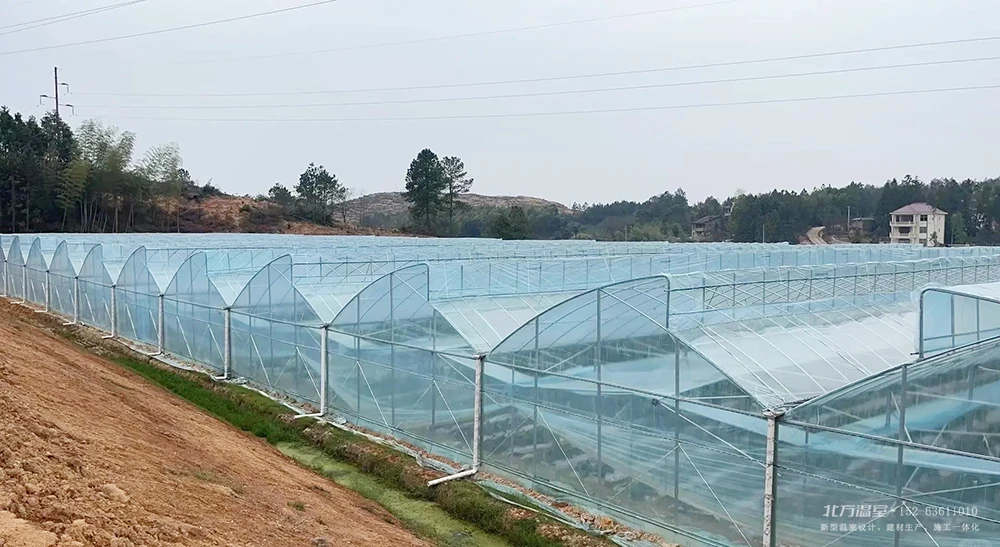
Sawtooth multi-span greenhouse
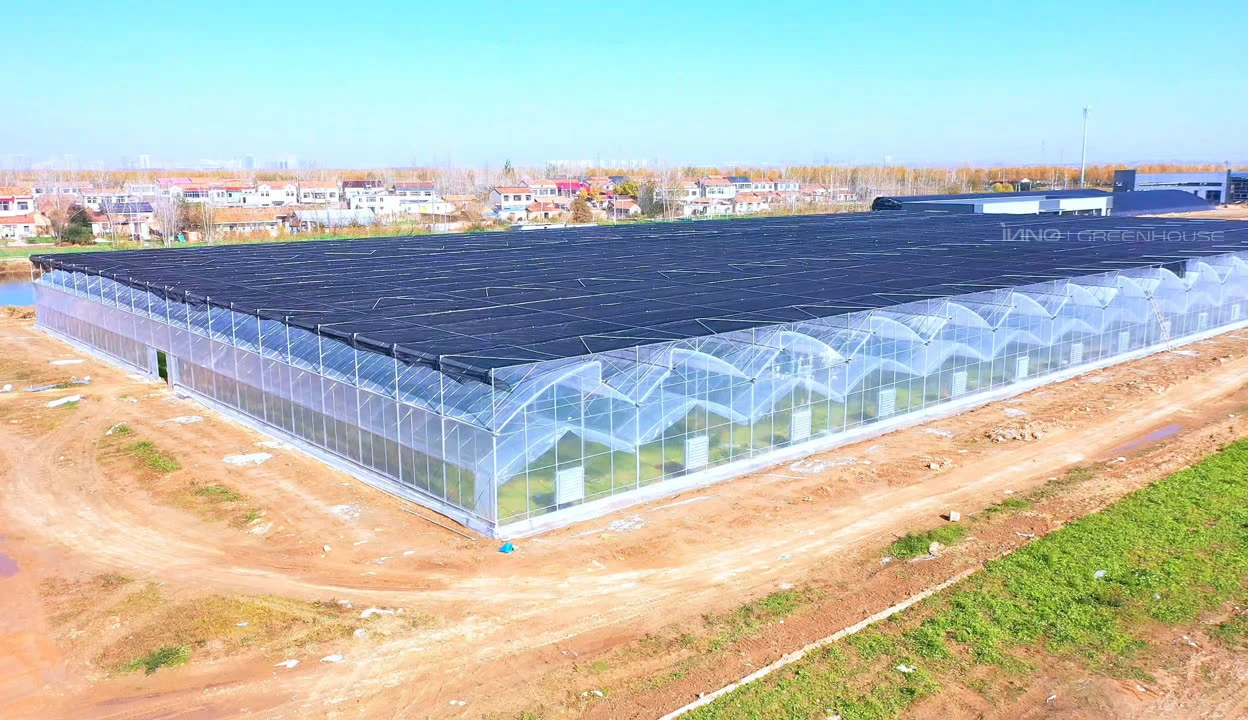
Sawtooth multi-span greenhouse with top external shading
Specifications & Construction
• Eave height: 3 m, ridge height: 4.6 m, single span: 6.0 m, bay length: 4 m, hot-dip galvanized steel frame
• One sawtooth roof per bay
• Insect net fitted around side walls and vertical sawtooth openings; roof covered with plastic film
• Side wall vents and sawtooth openings form cross flow to remove hot air
• Internal shade system installed inside. Vents sit above the shade layer for effective heat exhaust. Since the vent openings are vertical insect net panels (no roll film required), heavy rain cannot splash inside and damage crops
• This model has been installed and trialled on around 400 mu (26.67 ha) in Haikou, China.
Features
1. Sawtooth roof delivers excellent ventilation without roll-up film windows. This integrated vent-and-rainproof design cuts maintenance and running costs
2. Well-designed roof airflow keeps heat under control even with internal shading. Internal shading also stops algae growth on roof film and reduces shade net damage during typhoons; repairs are simple if damage occurs
3. Frame design draws lessons from both failed and surviving greenhouses after typhoon events. Roof trusses are welded into integral assemblies and bolted firmly to posts. Rigid base connections reduce effective post length and improve stability under horizontal wind loads
4. Generous internal clearance supports mechanised farming
Developed specifically for typhoon-prone tropical coastal regions after extensive field feedback, this greenhouse supports year-round vegetable production.
At approximately 247.50 CNY per m² (about 34.20 USD per m²), it costs less than externally shaded round arch greenhouses built for identical wind loads and is one of our top recommended options.
2. Sawtooth Agrivoltaic Greenhouse
Specifications & Construction
• Eave height: 2.5–3.0 m, ridge height: 4.1–4.6 m, span: 5.5 m, bay length: 4.0 m, roof angle: 15°–16°, hot-dip galvanized steel frame
• Single-slope sawtooth roof per bay
• Insect net on side walls and vertical sawtooth openings; roof covered with PV panels plus glass or plastic film
• Side and sawtooth vents create cross ventilation for heat removal. Vertical insect net vents keep rain out with no roll film needed
• Prototype houses have operated at the research station of Hainan University, China. A 15 MW agrivoltaic site covering roughly 33.33 ha uses this structure.
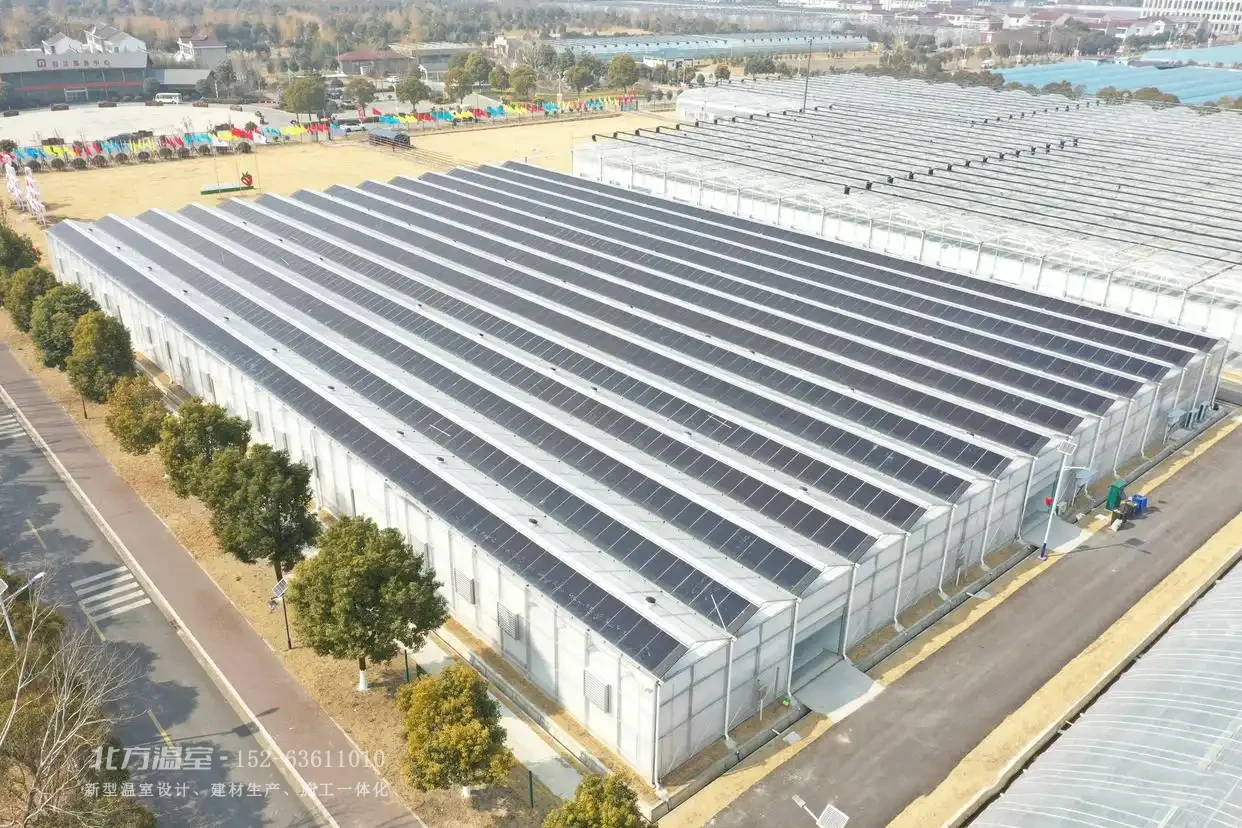
Photovoltaic greenhouse (solar-panel roof greenhouse)
Features
1. It inherits all ventilation and cooling advantages of the large sawtooth multi-span design above
2. It leverages the abundant sunshine and mild winters of tropical coastal areas. PV arrays do not compete with crops for light and heat resources; they work in synergy. PV panels also act as overhead shading to lower greenhouse temperatures in summer and autumn.
3. Compared with standard ground-mounted PV farms on the same land area, we reduce PV panel coverage by roughly 25%. This maintains target light levels inside: 18,000 lx average (10:00–16:00) in spring, summer and autumn, and above 7,000 lx in winter, matching the light demand for common tropical leafy greens (the dominant local vegetable type).
4. PV mounting steelwork forms part of the greenhouse structure. With no extra premium on greenhouse build cost, the finished house reaches Typhoon Class 12 resistance for leafy vegetable growing. Budget sits at roughly 247.50 CNY/m² (about 34.20 USD/m², PV panel exclusion).
This agrivoltaic design truly fulfils the dual-purpose vision: one plot of land for both power generation and crop production.
III. Quick Reference Table for the Six Greenhouse Models
This table summarises key dimensions and reinforcement methods of all six models, for fast comparison and preliminary selection.
Conclusion
Tropical coastal growing sites face overlapping hazards: typhoons, torrential rain and extreme solar radiation. Greenhouse design and construction must be built around real local field conditions.
We match greenhouse models according to plot layout, crop types, project budget and local typhoon design standards. Our engineering team continues monitoring in-service performance across project sites, iterating frame designs and delivering stable, reliable greenhouse solutions for tropical vegetable cultivation.